
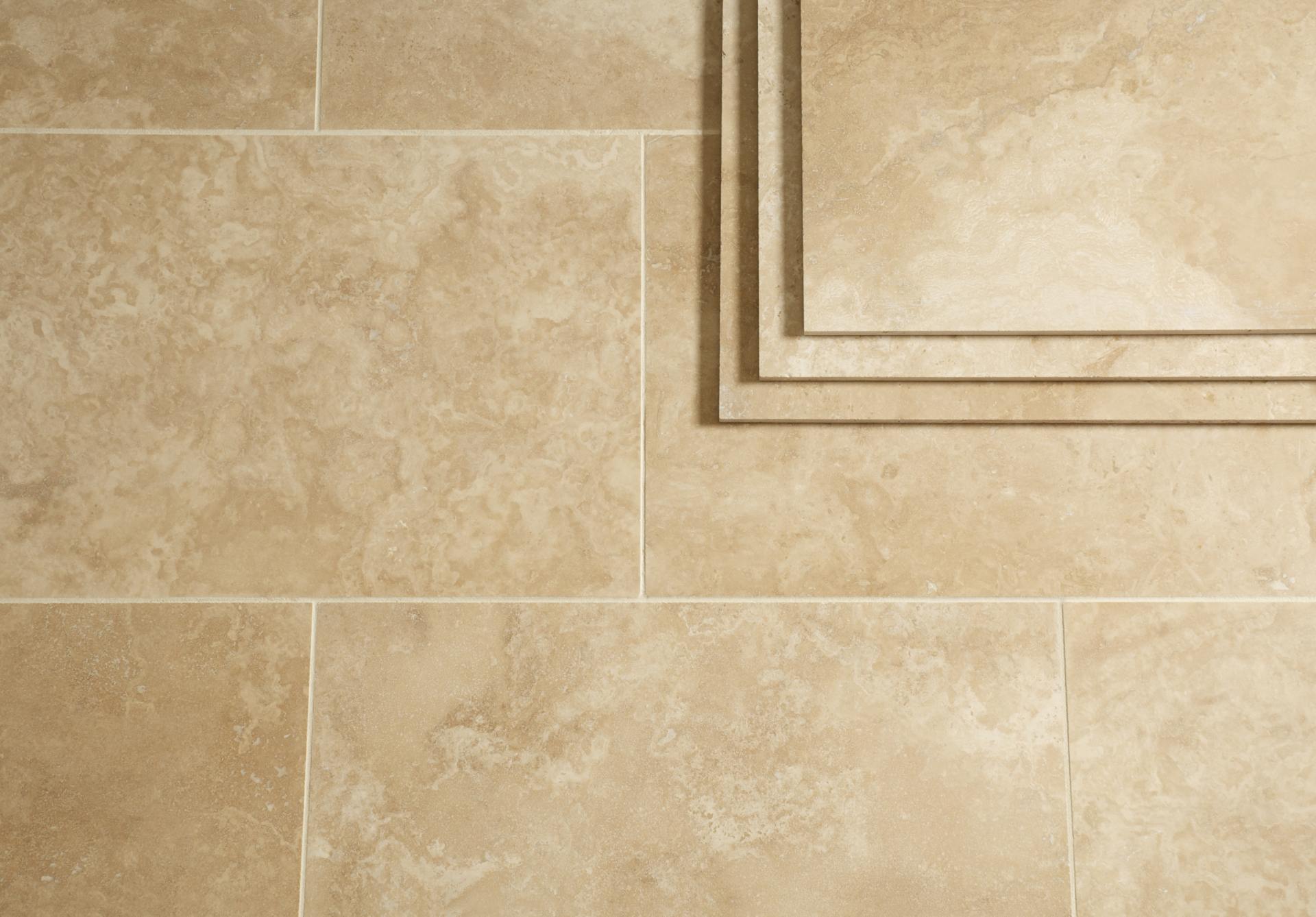
Turkish Travertine: Characteristics, Uses and More!
There is a special stone from Turkey (Türkiye) that’s especially very popular amongst international markets: Travertine. Although being similar to the travertines found in Italy or Iran; with its long history and variety, Turkish travertine is very unique and particularly distinctive. We can say that in almost all the Roman settlements inside Turkey, Travertine was a common building material and was used extensively in various applications, such as buildings, monuments, and roads. In fact, some cities (ex. Hierapolis which was founded near modern-day Denizli) were entirely made of Travertine!
Characteristics of Turkish Travertine

Turkish travertine has a uniform structure, a soft feel, and a low degree of hardness. Because of its soft texture and low hardness, it’s easy to remove and process travertine. Being lightweight and having a low density makes travertine easy to transport. Another prominent feature of travertine is the holes in it which gives the stone a worn and weathered appearance. It’s recommended to use travertine with a format called “filled”, due to its natural holes. To fill the stone, a suitable chemical is typically applied to seal the surface.
Some might say travertine is similar to limestone, which can be found in some areas in Turkey, but the molecular structure and texture of travertine and limestone differ significantly from one another. Limestone tends to be softer and usually doesn’t have holes like travertine.
Turkish travertine has been used mostly for walls and floor tilings, both for the interiors and exteriors of buildings.
Since travertine only develops around specific kind of mineral spring deposits, it gives it a unique and beautiful appearance. With a wide range of tactile textures, a warm and buttery color palette spanning from red to beige, and a sturdy composition that can withstand even heavy-duty wear and tear, travertine is a traditional yet fashionable addition to any home or apartment.

Where Can We Find Travertine in Turkey?
The majority of quarries are found in Denizli, a city in midwest of Turkey.

It’s easy to say that more than 50% of the quarries are near Denizli, but there are also quarries located in other parts of Turkey, such as Eskisehir and Afyon in the centre, Konya, Sivas in the northeast, Elazig and Erzurum in the eastern part, and some more scattered all over Turkey.

Pros of Travertine
- Travertine is the best option if you have a bigger space and a limited budget.
- It is sturdy and durable enough to be used daily and travertine tiles last a very long time.
- Travertine is resistant to heat and it’s almost impossible for it to get hot. Because of this, travertine can be used outside, as patios.
- It’s easy to replace travertine tiles.
- Travertine tiles are environmentally friendly.
- It is usually easy to clean with a regular vacuum cleaner.


Cons of Travertine
- Travertine tiles are heavier than most of marbles and stones.
- Acidic spills may damage them.
- If a sealer is not frequently reapplied, liquids may penetrate the stone’s surface, causing harm and discoloration.
Varieties of Turkish Travertine
Travertine comes in different varieties depending on shades and colours. Most common travertine shades are:


Travertine also varies depending on its cut-types. The two most common cut types are Vein-Cut (VC) and Cross-Cut (CC). Both techniques give different aesthetic looks to the stone, and it makes it possible to achieve a significantly diversified look depending on the cut type. Vein Cut reveals the formation’s border and creates a linear pattern in the travertine tile that lets us see the veins of the stone. Cross Cut is a cut that runs parallel to the bedding plane. This reveals a haphazard pattern that is often circular. Although this cut produces a strong and sturdy tile, it is not recommended for high-traffic areas due to the risk of holes forming from repeated use.

Travertine Prices
To learn about the prices or to get more information about stones, you can contact Dogu Stone! Dogu Stone’s expert team is ready to help you get the best prices for premium stones.
Dogu Stone’s Appreciation of Natural Stone
Working with people who love nature and natural stone and value the customer’s needs is a must in this industry. For more than 20 years, Dogu Stone has helped and still helps you get the best craftsmanship at the best prices.


LET US HELP YOU WITH YOUR PROJECT!
Latest Posts

Understanding Marble Finishes: Polished, Honed, Bamboo & Fluted Explained
Marble is one of nature’s most elegant materials; timeless, versatile, and full of character. But beyond color and veining, there’s another detail that makes a big difference in how marble looks and feels: the surface finish. Whether you’re choosing marble for a countertop, wall cladding, or feature design, understanding the difference between polished, honed, leathered,…
Marble Trends in the UAE: What’s Hot in 2025
The United Arab Emirates (UAE) has always been synonymous with luxury, and when it comes to interior design and architecture, marble remains one of the most sought-after materials. From grand hotels to upscale residences, marble is a statement of elegance and opulence. In this season (2024-2025), several new trends are emerging, driven by the region’s…

All You Need to Know About Nero (Black) Marquina Marble
When it comes to marble, the world has no shortage of stunning varieties. However, few are as iconic and sought-after as Nero Marquina (Black Marquina) marble. With its deep black background and striking white veining, this natural stone is synonymous with sophistication, luxury, and timeless beauty. In this article, we will explore the origins, characteristics,…

A New Trend: Caressi Verde Marble
In the ever-evolving world of natural stone, the introduction of Caressi Verde brings a sophisticated new option for homeowners, designers, and builders alike. This dark green marble, with its distinctive cloudy veins, promises to add a refined yet organic touch to any space. Let’s dive into the unique characteristics of this stone and explore its…
Something went wrong. Please refresh the page and/or try again.
